
A Frustrating Problem That's More Common Than You Think
You press the button on your garage door remote, the door starts its descent, and then — just before it reaches the floor — it stops and reverses back up. You try again. Same result. Maybe it works on the third attempt, or maybe it doesn't work at all.
This is one of the most common garage door complaints we hear from homeowners in Hamilton, OH, and it's understandably frustrating. Your garage door is supposed to be one of the most reliable parts of your home. When it won't stay closed, it creates security concerns, lets in weather, and disrupts your daily routine.
The good news is that this problem usually has a straightforward cause. Let's walk through the most likely reasons your garage door reverses before closing and what you can do about each one.
Understanding Your Garage Door's Safety System
Before we dive into causes, it helps to understand why your garage door is designed to reverse in the first place. Every modern garage door opener manufactured after 1993 is required by federal law to include two safety mechanisms:
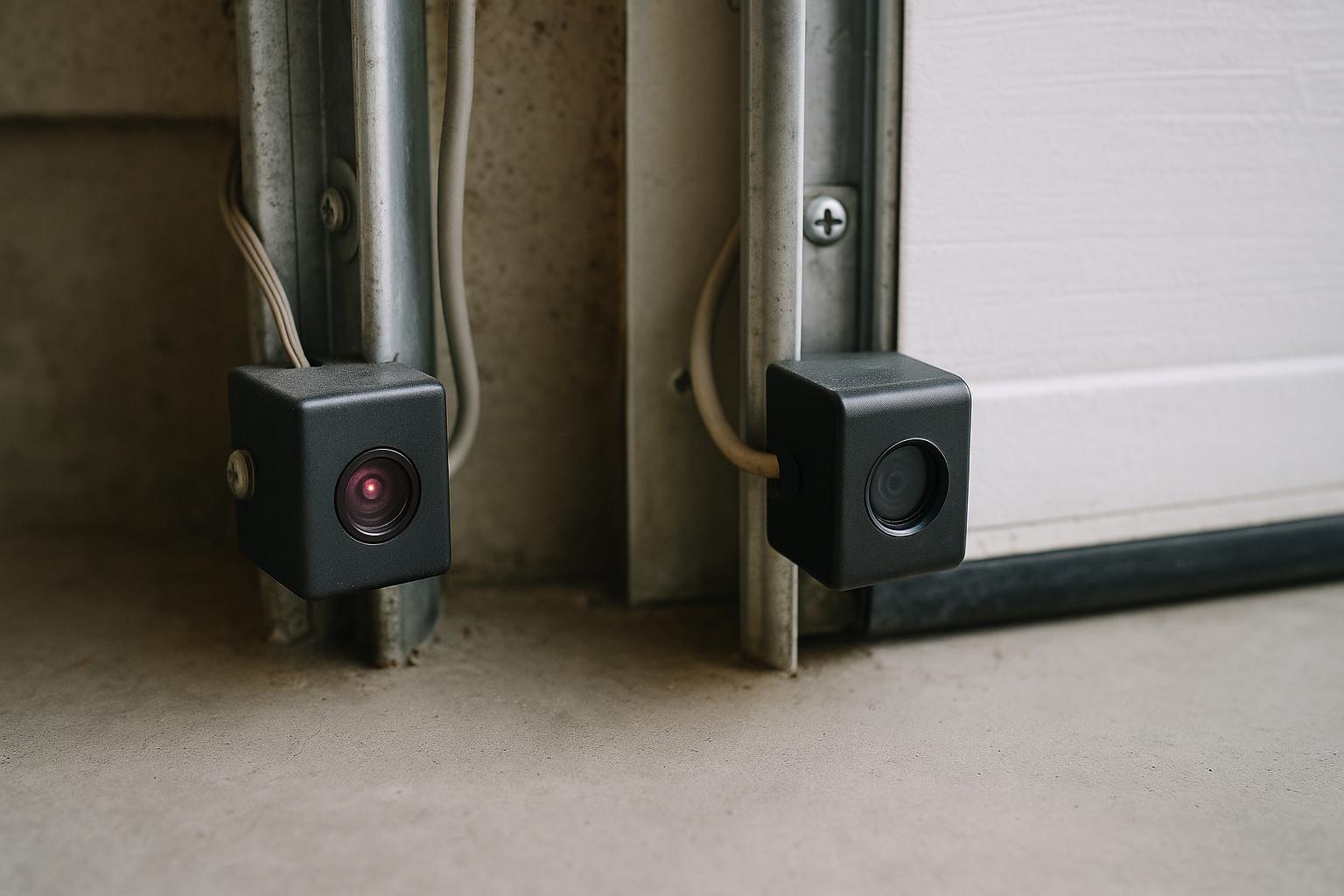
- Photo-eye sensors: These are the small sensors mounted near the bottom of your garage door tracks on each side. They project an invisible beam across the opening. If anything breaks that beam while the door is closing, the door reverses.
- Auto-reverse mechanism: If the door encounters physical resistance while closing — like hitting an object or the floor with too much force — it automatically reverses direction.
Both of these features exist to prevent injuries and property damage. So when your door reverses unexpectedly, it's usually because one of these safety systems is being triggered, even when there's no actual obstruction.
Cause #1: Misaligned Photo-Eye Sensors
This is the number one reason garage doors reverse before reaching the floor. The photo-eye sensors on either side of your garage door opening need to be precisely aligned to maintain their infrared beam. If one sensor gets bumped, shifted, or knocked slightly out of position, the beam breaks, and the opener interprets that as an obstruction.
What to Check
Look at the small LED lights on each sensor. On most models, both lights should be steady and glowing — typically one green and one amber. If one light is blinking or off, that sensor is likely misaligned or malfunctioning.
What You Can Do
Gently adjust the sensor that appears to be off until both lights are steady. The sensors are usually mounted with wing nuts or brackets that allow minor adjustments. Be careful not to over-tighten them, as this can crack the sensor housing.
Cause #2: Dirty or Obstructed Sensors
Even if your sensors are perfectly aligned, dirt, cobwebs, leaves, or moisture on the sensor lenses can weaken or block the beam. This is especially common here in Hamilton where seasonal changes bring pollen in spring, humidity in summer, and debris in fall.
What You Can Do
Wipe both sensor lenses gently with a soft, dry cloth. Check for cobwebs or debris around the sensors and clear anything away. This simple step fixes the problem more often than people expect.
Cause #3: Incorrect Close-Force or Travel-Limit Settings
Your garage door opener has adjustable settings that control how far the door travels and how much force it uses to close. If the close-force setting is too low, the door may interpret normal contact with the ground as an obstruction and reverse. If the travel-limit setting is off, the opener may think the door has hit something before it actually reaches the floor.
What You Can Do
Most openers have small adjustment dials or screws on the back or side of the motor unit, labeled for travel limits and force. Small, incremental adjustments can solve the problem. However, if you're unsure which settings to change, it's best to call a professional. Incorrect adjustments can create a safety hazard — a door that closes with too much force can cause serious injury.
Cause #4: Damaged or Worn Tracks
Your garage door rides along metal tracks on either side of the opening. If those tracks are bent, dented, or have accumulated rust and debris, the door can bind or encounter resistance as it closes. The opener senses that resistance and triggers a reversal.
What to Check
Visually inspect the tracks from top to bottom. Look for obvious bends, dents, or gaps where the track sections meet. Also check for buildup of grime or small objects that may have fallen into the track channel.
What You Can Do
You can clean the tracks with a damp cloth and remove any visible debris. However, if the tracks are bent or damaged, this is a repair best left to a professional. Attempting to bend tracks back into shape without the right tools can make the problem worse or compromise the door's safe operation.
Cause #5: Worn or Broken Springs
Your garage door springs counterbalance the weight of the door, making it possible for the opener to lift and lower it smoothly. When springs wear out or lose tension, the door becomes heavier than the opener expects. This extra weight can trigger the auto-reverse mechanism during closing.
If your door also seems sluggish when opening, slams down faster than usual, or you've noticed a gap in one of the springs above the door, spring wear is likely the culprit.
What You Can Do
Do not attempt to repair or replace garage door springs yourself. These springs are under extreme tension and can cause severe injury if handled improperly. This is one repair that absolutely requires a trained technician with the right tools and experience.
Cause #6: Wiring Issues
Less commonly, the wiring that connects your photo-eye sensors to the opener motor can become frayed, damaged by pests, or loosened at the connection points. Intermittent electrical connections can cause the door to reverse unpredictably.
What You Can Do
If you've checked the sensors, cleaned the lenses, and verified the settings, and the problem persists, there may be a wiring issue that requires professional diagnosis. This is especially common in older homes around Fairfield, Middletown, and other communities in the area where garage wiring may have been in place for decades.
When to Call a Professional
Some of the fixes above — cleaning sensors, minor alignment adjustments — are safe and simple for most homeowners. But if the problem persists after trying these steps, or if you suspect spring damage, track issues, or electrical problems, it's time to bring in a professional.
At Hamilton Garage Door Works, we diagnose reversing issues quickly because we've seen hundreds of them. We'll tell you exactly what's causing the problem, explain your options, and fix it right the first time. We serve homeowners throughout Hamilton, Trenton, Monroe, Oxford, and the surrounding area.
Don't Ignore a Reversing Garage Door
A garage door that won't close isn't just an inconvenience — it's a security risk and an invitation for weather damage, pests, and energy loss. The longer you work around the problem, the more likely it is that an underlying issue like worn springs or damaged tracks will get worse and lead to a more expensive repair.
If your garage door keeps reversing and you can't pinpoint the cause, give us a call. We'll get it sorted out so you can get back to pressing the button and walking away — exactly the way it should work.