
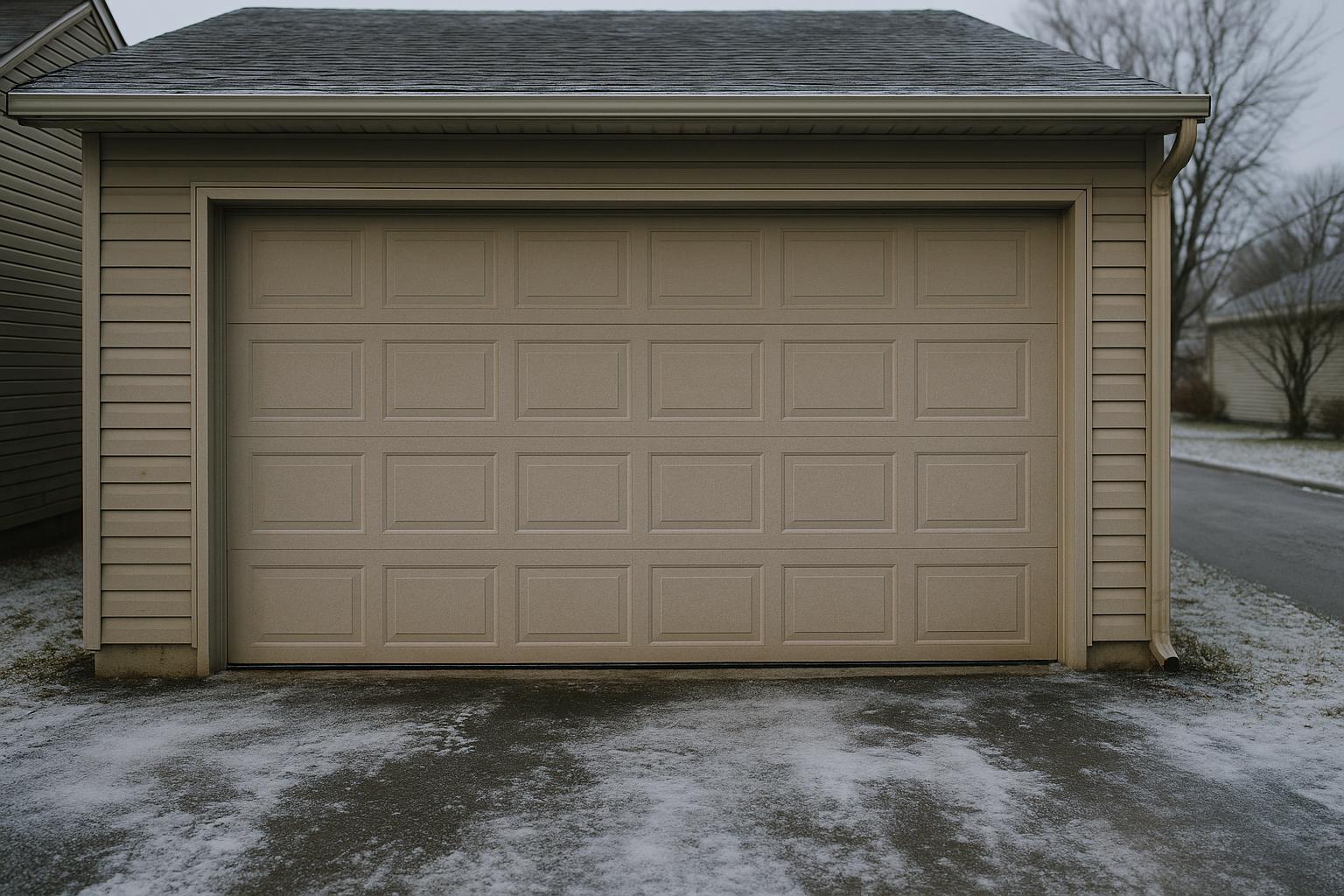
Winter and Your Garage Door: A Common Hamilton Headache
It's a freezing morning in Hamilton, OH. You're running late for work, you press the button on your garage door opener, and nothing happens. Or maybe the door groans, lifts a few inches, and then stops. Few things are more frustrating than a garage door that refuses to cooperate when the temperature drops.
Cold weather garage door problems are one of the most common calls we get at Hamilton Garage Door Works during the fall and winter months. The good news is that most of these issues are preventable — and when they aren't, they're usually fixable fast. Here's what you need to know about why cold weather wreaks havoc on your garage door and what you can do about it.
Why Cold Weather Affects Your Garage Door
Your garage door is the largest moving part of your home, and it relies on a system of springs, tracks, rollers, weatherstripping, and an electric opener to function properly. Cold temperatures can affect every single one of these components. Here's how:
1. Metal Contracts in the Cold
When temperatures drop, metal components like tracks, springs, and hinges contract slightly. This contraction can cause parts to bind, stiffen, or fit together less smoothly than they do in warmer weather. In some cases, the added friction is enough to prevent your opener from lifting the door at all.
2. Lubricant Thickens or Dries Out
The grease and lubricant on your springs, rollers, and hinges can thicken in cold weather, creating resistance throughout the system. If your door hasn't been lubricated recently, old dried-out lubricant can make the problem even worse. This is one of the most common — and most easily preventable — causes of a sluggish garage door in winter.
3. Weatherstripping Freezes to the Ground
The rubber weatherstripping along the bottom of your garage door is designed to seal out moisture, drafts, and pests. But when water collects beneath the seal and freezes overnight, your door can literally freeze to the garage floor. Forcing it open can tear the weatherstripping or damage the door and opener.
4. Opener Sensitivity Issues
Garage door openers are calibrated to handle a certain amount of resistance. When cold weather increases friction throughout the system, your opener may interpret the extra resistance as an obstruction and refuse to operate. This is a safety feature, but it can be inconvenient when the real problem is just stiff components.
How to Prevent Cold Weather Garage Door Problems
Most winter garage door issues can be avoided with a little preparation. Here are the steps we recommend to Hamilton homeowners before cold weather sets in:
Lubricate All Moving Parts
Apply a silicone-based garage door lubricant to the springs, rollers, hinges, and tracks at least twice a year — once in the spring and once in the fall before temperatures drop. Avoid using WD-40 as a long-term lubricant, as it's primarily a solvent and won't provide lasting protection against cold-weather friction.
Inspect and Replace Worn Weatherstripping
Check the rubber seal along the bottom of your door for cracks, gaps, or deterioration. Replacing worn weatherstripping before winter helps prevent freezing and also improves your garage's insulation, which can save you money on energy bills.
Keep the Threshold Clear
Before a freeze, make sure the area where your door meets the ground is dry and free of standing water. If your driveway slopes toward the garage, consider adding a threshold seal or improving drainage to prevent water from pooling and freezing under the door.
Test the Door's Balance
Disconnect the opener by pulling the emergency release cord, then manually lift the door halfway. A properly balanced door should stay in place. If it falls or rises on its own, the springs may need adjustment. An unbalanced door puts extra strain on your opener, and that strain is amplified in cold weather.
Schedule a Fall Maintenance Checkup
The easiest way to prevent winter problems is to have a professional inspect your entire garage door system before the cold arrives. At Hamilton Garage Door Works, our maintenance service includes lubrication, balance testing, hardware tightening, safety sensor checks, and a full inspection of springs, cables, and rollers. It's a small investment that can save you from an emergency repair on the coldest day of the year.
What to Do If Your Garage Door Is Already Frozen Shut
If you wake up to a garage door that's frozen to the ground, here's what to do — and what not to do:
- Don't force it. Pressing the opener button repeatedly or trying to yank the door open can damage the opener, strip the gears, tear the weatherstripping, or even bend the door panels.
- Try gently breaking the seal. Use a flat shovel or a heat gun on a low setting to carefully melt the ice along the bottom edge of the door. You can also pour warm (not boiling) water along the seal to loosen the bond.
- Once it's free, dry the area. After you open the door, clear away any remaining ice and dry the threshold to prevent it from refreezing.
- If the door still won't open, the problem may be more than just ice. Stiff springs, a struggling opener, or misaligned tracks could all be contributing. That's when it's time to call a professional.
When to Call a Professional
Some cold weather garage door issues are simple enough to handle on your own with a can of lubricant and a little patience. But other problems require professional attention. Call a garage door technician if you notice any of the following:
- The door won't open even after the ice has been cleared
- The opener runs but the door doesn't move
- You hear loud popping or snapping sounds, which could indicate a broken spring
- The door opens unevenly or appears crooked on the tracks
- The door is visibly sagging or the panels are warped
Attempting to repair springs or cables on your own is dangerous. These components are under extreme tension and should only be handled by trained professionals with the right tools and experience.
Don't Wait for the First Freeze
Hamilton winters can be unpredictable. One week it's 50 degrees, and the next we're dealing with single digits and ice. The best time to prepare your garage door for cold weather is before the cold arrives. A quick maintenance visit now can prevent a costly and inconvenient breakdown later.
At Hamilton Garage Door Works, we help homeowners across Hamilton, Fairfield, Middletown, and the surrounding communities keep their garage doors running smoothly all year long. Whether you need a tune-up, a repair, or a full replacement, we show up on time and get the job done right.
If your garage door is struggling in the cold — or if you want to make sure it doesn't — give us a call. We're here to help.